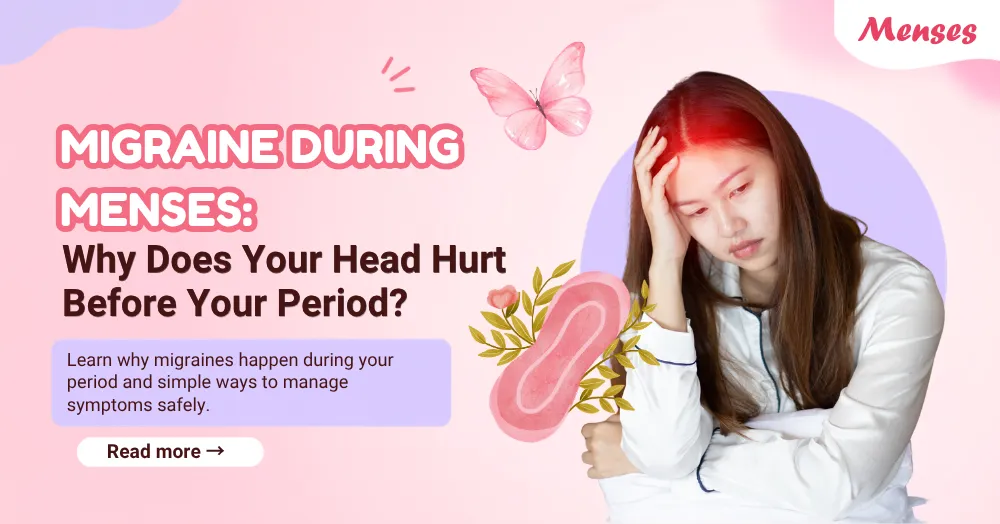
Migraine During Menses: Why Does Your Head Hurt Before Your Period?
Many women experience Migraine During Menses before or during their menstrual period. The pain can feel stronger than a regular headache. It may also come with nausea, sensitivity to light, or sensitivity to sound.
For some women, the migraine starts a few days before menstruation. For others, it begins on the first day of bleeding. The symptoms can also last longer than migraines that happen at other times of the month.
But why does your head hurt before your period?
Hormonal changes are one of the main reasons. However, hormones are not the only possible trigger. Stress, lack of sleep, dehydration, skipped meals, and changes in daily habits can also play a role.
Read also: 9 Powerful Reasons for a Healthier Period and Better Menstrual Care
The good news is that understanding your triggers can help you manage the pain. With the right habits, you may be able to reduce the frequency or severity of menstrual migraines.
What Is Migraine During Menses?
Migraine During Menses refers to a migraine attack that occurs around the time of menstruation.
Menstrual migraine is commonly associated with changes in estrogen levels. Estrogen naturally rises and falls throughout the menstrual cycle. A drop in estrogen before menstruation may trigger migraine symptoms in some women.
A menstrual migraine can feel different from an ordinary headache.
The pain may be:
-
Throbbing or pulsating.
-
Moderate to severe.
-
Felt on one or both sides of the head.
-
Worse when moving or doing normal activities.
-
Accompanied by nausea or vomiting.
-
Associated with sensitivity to light or sound.
Some women may also experience visual changes or other symptoms known as aura.
Not every headache during menstruation is a migraine. A tension headache, sinus-related headache, dehydration, or another condition can cause similar discomfort.
For this reason, paying attention to the pattern of your symptoms is important.
Why Does Migraine During Menses Happen?
Hormonal changes are one of the most important factors behind menstrual migraine.
During the menstrual cycle, estrogen and progesterone levels change naturally. Estrogen levels can fall sharply just before menstruation begins.
For people who are sensitive to hormonal changes, this fluctuation may trigger a migraine attack.
Estrogen Changes Before Your Period
Estrogen affects many processes in the body. It also interacts with systems involved in pain and migraine.
Before menstruation, estrogen levels may decrease. This sudden change can make some women more vulnerable to headaches.
This is why you may notice that your migraine appears repeatedly around the same time each month.
The pattern can be useful information.
If your headache usually appears one or two days before your period, for example, you may have a hormone-related migraine pattern.
Changes in Other Hormones
Estrogen is not the only hormone that changes during the menstrual cycle.
Progesterone also changes throughout the cycle. The interaction between different hormones may influence how the nervous system responds to pain.
However, hormonal changes are not identical for everyone.
Some women have migraines that are strongly connected to menstruation. Others may experience migraines at different points in their cycle.
Other Factors Can Make It Worse
Hormonal changes may be the main trigger, but other factors can make a migraine more likely.
Common triggers include:
-
Poor sleep.
-
Stress.
-
Skipping meals.
-
Dehydration.
-
Too much caffeine or sudden caffeine withdrawal.
-
Bright lights.
-
Strong smells.
-
Certain foods.
-
Physical or emotional exhaustion.
-
Changes in daily routines.
This means your migraine may not have just one cause.
A combination of hormonal changes and lifestyle triggers may contribute to the attack.
Migraine During Menses vs. Regular Headache
It can be difficult to tell a migraine from a regular headache.
However, migraines often have several distinctive symptoms.
A regular tension headache may feel like pressure or tightness around the head. The pain is often mild to moderate.
A migraine may feel more intense.
It can cause throbbing pain and may make normal activities difficult. Walking, exercising, or climbing stairs may make the pain worse.
Migraine may also cause nausea or increased sensitivity to light and sound.
Common Migraine Symptoms
During Migraine During Menses, you may experience:
Some people experience an aura before or during a migraine.
What Is Migraine Aura?
Aura refers to temporary neurological symptoms that can happen before or during some migraine attacks.
Visual aura is one of the most common forms.
You may see:
-
Flashing lights.
-
Zigzag patterns.
-
Blind spots.
-
Shimmering areas.
Some people may also experience tingling, numbness, dizziness, or difficulty speaking.
Aura usually develops gradually and resolves within a limited period.
However, new neurological symptoms should not automatically be assumed to be migraine. If you experience these symptoms for the first time, especially if they are sudden or severe, seek medical evaluation.
When Does Migraine During Menses Usually Start?
Menstrual migraine can occur before or during your period.
For many women, the migraine appears during the days immediately before menstruation or during the first few days of bleeding.
This period is important because estrogen may drop around this time.
However, the timing can vary from person to person.
You may notice that your migraine:
-
Starts before menstrual bleeding.
-
Begins on the first day of your period.
-
Continues for several days.
-
Happens repeatedly around the same stage of your cycle.
Keeping a menstrual and headache diary can help you identify your personal pattern.
7 Common Triggers That Can Make Period Migraines Worse
Hormonal changes may be unavoidable. But some other triggers can often be managed.
1. Lack of Sleep
Poor sleep can increase migraine risk.
Going to bed too late, sleeping for too few hours, or changing your sleep schedule may affect your body.
Try to maintain a consistent sleep routine.
Aim for enough sleep each night. Going to bed and waking up at similar times can also help.
2. Skipping Meals
Long periods without food may trigger headaches in some people.
This can happen when you are busy with work, college, travel, or household activities.
Try not to skip meals.
Choose balanced meals that contain protein, carbohydrates, healthy fats, vegetables, and other nutrient-rich foods.
Regular meals may help keep your energy levels more stable.
3. Not Drinking Enough Water
Dehydration can contribute to headaches.
This can become more noticeable when you are tired, active, or spending time in a hot environment.
Drink water regularly throughout the day.
Do not wait until you feel extremely thirsty.
4. Too Much Stress
Stress is a common migraine trigger.
Work deadlines, studying, relationship problems, financial concerns, and lack of rest can all increase stress.
You cannot always remove stress from your life.
But you can create small moments of relaxation.
Try:
Even a few minutes of relaxation may help you feel more comfortable.
5. Caffeine Changes
Caffeine affects people differently.
Some people find that caffeine can trigger migraines. Others may experience headaches when they suddenly reduce their usual caffeine intake.
If you drink coffee or other caffeinated drinks regularly, avoid making sudden major changes without understanding how your body responds.
Keeping a headache diary can help you notice a pattern.
6. Bright Light and Strong Smells
Bright screens, flashing lights, perfumes, smoke, or strong food smells may trigger migraine symptoms in some people.
When a migraine begins, try to rest in a quiet and dim environment.
Reducing sensory stimulation may make it easier to manage the symptoms.
7. Overexertion
Physical activity is generally good for health. However, intense activity can sometimes worsen an active migraine.
During an attack, give your body time to rest.
Once symptoms improve, regular moderate exercise may be beneficial for overall health and may help some people reduce migraine frequency.
How to Manage Migraine During Menses
Managing Migraine During Menses often requires a combination of lifestyle habits and appropriate treatment.
The best approach depends on your symptoms, health history, and how often your migraines occur.
Rest in a Quiet Room
When migraine symptoms begin, reduce exposure to light and noise.
A cool, quiet, and dark room may feel more comfortable.
Close your eyes and allow yourself to rest.
If possible, reduce screen time while the symptoms are intense.
Use a Cold Compress
A cold compress may provide temporary relief for some people.
Place it gently on your forehead or the back of your neck.
Avoid applying ice directly to your skin. Wrap cold items in a cloth before use.
Stay Hydrated
Drink water regularly.
If nausea makes drinking difficult, take small sips instead of drinking a large amount at once.
Hydration is especially important if you have been vomiting.
Support Menstrual Comfort with Menses

Besides maintaining healthy habits, some women also look for herbal products to support menstrual comfort. Menses Herbal Medicine for Promoting Menstrual Flow and Relieving Natural Menstrual Pain is one option that can be considered as part of a menstrual wellness routine.
Menses is formulated as a herbal product traditionally used to help support menstrual comfort and relieve menstrual pain naturally. Always follow the recommended directions for use and check the ingredients before taking any herbal product.
If you are looking for a herbal product to support a more comfortable menstrual period, you can learn more about Menses here.
🌷Click here to purchase: store.menses.id
Eat Regularly
Try to maintain regular meals.
If you feel nauseous, choose simple foods that you can tolerate.
Do not force yourself to eat large meals when you are experiencing severe nausea.
Reduce Your Triggers
Think about what happened before the migraine started.
Did you sleep poorly?
Did you skip breakfast?
Were you under unusual stress?
Did you drink more or less caffeine than usual?
Identifying patterns can help you prevent future attacks.
Is Brown Discharge After Your Period Normal or a Sign of a Problem? Here Are 6 Causes!
Can Lifestyle Changes Help Prevent Menstrual Migraine?
Yes, healthy routines may help reduce some migraine triggers.
Lifestyle changes are not a guaranteed cure. However, they can support better migraine management.
Try to keep your routine consistent.
Create a Sleep Schedule
Go to bed and wake up around the same time each day.
Avoid regularly staying up very late.
Make your bedroom comfortable and limit distractions before bedtime.
Stay Physically Active
Regular physical activity can support overall health.
Walking, cycling, swimming, yoga, and other moderate activities may be suitable for many people.
Start slowly if you are not used to exercising.
Avoid exercising intensely when you are experiencing a severe migraine.
Manage Daily Stress
Stress management is important.
You do not need complicated techniques.
Simple habits can make a difference.
Take short breaks during busy days. Stretch your body. Practice slow breathing. Spend time outdoors when possible.
The goal is to create a routine that feels realistic.
Should You Keep a Migraine Diary?
A migraine diary can be very useful.
Write down:
-
The first day of your period.
-
When the headache starts.
-
How long it lasts.
-
How severe the pain feels.
-
Other symptoms.
-
What you ate.
-
How much you slept.
-
Your stress level.
-
Caffeine intake.
-
Medicines or treatments used.
-
Possible triggers.
After several cycles, you may notice a pattern.
For example, you may discover that your migraine usually starts one day before your period and becomes worse when you sleep poorly.
This information can also help a healthcare professional understand your symptoms.
When Should You See a Doctor?
You should consider speaking with a healthcare professional if migraines are frequent, severe, or interfering with your daily life.
Medical advice is especially important if your headaches are new or have suddenly changed.
Seek urgent medical attention for a sudden, extremely severe headache or a headache accompanied by serious symptoms such as:
-
Fainting.
-
Seizures.
-
Severe confusion.
-
New weakness or numbness.
-
Difficulty speaking.
-
Severe vision problems.
-
High fever with a stiff neck.
-
A headache following a serious head injury.
These symptoms can have causes other than migraine and should be evaluated promptly.
How Is Migraine During Menses Treated?
Treatment depends on how often your migraines happen and how severe they are.
A healthcare professional may recommend treatment for acute migraine attacks.
Some people may also benefit from preventive treatment, especially when menstrual migraines are frequent or significantly affect daily activities.
Treatment options can include certain pain-relieving medicines, migraine-specific medicines, or preventive approaches.
However, not every treatment is suitable for everyone.
Some medicines may have important restrictions or interactions. People who are pregnant, trying to become pregnant, breastfeeding, or taking other medicines should discuss treatment choices with a healthcare professional.
Avoid taking pain medicine too frequently. Overuse of some headache medicines can contribute to medication-overuse headaches.
Can Menstrual Migraines Be Prevented?
In some cases, menstrual migraines can be reduced with preventive strategies.
The first step is identifying the pattern.
If your migraines consistently happen around your menstrual period, your healthcare professional may discuss preventive options with you.
This may involve lifestyle changes, medication strategies, or both.
Do not start hormonal or prescription treatment on your own.
Your healthcare professional can consider your migraine pattern, other health factors, medications, and individual risks before recommending an approach.
What About Herbal or Natural Approaches?
Some people prefer natural approaches when managing menstrual discomfort.
Common approaches include adequate hydration, balanced meals, enough rest, gentle activity, and stress management.
Herbal products are also sometimes used traditionally for menstrual comfort.
However, “natural” does not automatically mean safe for everyone.
Herbal ingredients can interact with medicines or may not be appropriate for certain people.
If you are considering an herbal product, check the ingredients and follow the recommended use. If you take medication or have an ongoing health condition, discuss it with a healthcare professional first.
Simple Daily Habits to Reduce Migraine Triggers
You do not need to completely change your lifestyle.
Start with small habits that you can maintain.
Drink enough water.
Eat regular meals.
Get consistent sleep.
Take breaks when you feel stressed.
Avoid known personal triggers.
Track your menstrual cycle.
Track your headaches.
Give your body enough time to recover.
These simple habits can help you understand what affects your migraines.
A Simple Routine Before Your Period
If you regularly experience Migraine During Menses, preparation may help.
Start by checking your menstrual cycle.
If you know your period is approaching, pay more attention to sleep, hydration, meals, and stress.
Keep water nearby.
Avoid skipping meals.
Prepare a comfortable place where you can rest if symptoms begin.
If a healthcare professional has already recommended a migraine treatment plan, follow it as directed.
Being prepared can make an unexpected migraine feel more manageable.
Does Everyone Get Migraine During Menses?
No.
Many women experience headaches during their menstrual cycle, but not everyone develops menstrual migraine.
Some people experience migraines only around their period.
Others may have migraines at different times of the month.
Some people never experience migraine attacks.
Your individual migraine pattern can change over time.
Hormonal changes, lifestyle factors, age, stress, sleep, and other factors may influence the pattern.
That is why tracking symptoms can be helpful.
Frequently Asked Questions About Migraine During Menses
Is Migraine During Menses normal?
Menstrual migraines can happen because hormonal changes around menstruation may trigger migraine attacks in susceptible people.
However, severe or unusual headaches should not automatically be considered normal.
If your headaches are frequent, worsening, or interfering with daily life, speak with a healthcare professional.
Why does my head hurt before my period?
A drop in estrogen before menstruation may trigger migraine in some people.
Other factors can also contribute, including stress, poor sleep, dehydration, skipped meals, and changes in caffeine intake.
The exact trigger can differ from person to person.
How long can a menstrual migraine last?
Migraine duration varies.
Menstrual migraines may last longer or feel more severe than migraines that happen at other times.
If a headache continues for an unusually long time or becomes difficult to manage, seek medical advice.
Can dehydration cause a migraine during menstruation?
Dehydration can contribute to headaches and may act as a migraine trigger for some people.
Drink water regularly throughout the day, especially when you are active or in a hot environment.
Can lack of sleep trigger menstrual migraine?
Yes.
Poor sleep or changes in your normal sleep schedule can contribute to migraine attacks.
Maintaining a consistent sleep routine may help reduce one potential trigger.
Should I avoid caffeine during my period?
Not necessarily.
Caffeine affects people differently. For some people, it can be a migraine trigger. For others, changes in caffeine intake may cause headaches.
Instead of making sudden changes, track how caffeine affects your symptoms.
Can stress make menstrual migraine worse?
Yes.
Stress can contribute to migraine attacks in some people.
Relaxation techniques, regular breaks, adequate sleep, and manageable daily routines may help reduce stress-related triggers.
When should I worry about a migraine?
Seek urgent medical attention if you experience a sudden and extremely severe headache, new weakness or numbness, difficulty speaking, severe confusion, seizures, fainting, serious vision problems, or other unusual neurological symptoms.
A new or significantly different headache should also be evaluated by a healthcare professional.
Final Thoughts
Migraine During Menses can be frustrating, especially when the pain appears around the same time every month.
Hormonal changes, particularly changes in estrogen, can play an important role. However, sleep, stress, hydration, meals, caffeine, and other personal triggers may also influence migraine attacks.
The first step is understanding your pattern.
Track your period and headaches. Notice when the pain starts. Record your symptoms and possible triggers.
Then, focus on simple habits.
Get enough sleep. Drink water regularly. Eat consistently. Manage stress. Rest when symptoms appear.
If migraines are severe, frequent, or affecting your daily activities, talk with a healthcare professional. You do not have to manage recurring menstrual migraines alone.
With better awareness and an appropriate management plan, it can become easier to understand your body and handle headaches around your period.
References
-
American Migraine Foundation. (2022). Hormonal and Menstrual Migraine: Symptoms and Treatment. American Migraine Foundation.
-
Cleveland Clinic. (2024). Menstrual Migraines (Hormone Headaches): Symptoms, Treatment & Prevention. Cleveland Clinic.
-
Mayo Clinic. Migraine: Symptoms and Causes. Mayo Clinic.
-
Mayo Clinic Press. (2023). Estrogen Fluctuations and Migraines: The Menstrual Connection. Mayo Clinic Press.
-
National Institute of Neurological Disorders and Stroke (NINDS). Migraine. National Institutes of Health.
-
American Migraine Foundation. Migraine in Women: The Connection Between Migraine and Hormones. American Migraine Foundation.
Get Menses from Official Stores
To ensure product authenticity, you can purchase Menses via:
Shopping at official stores ensures security and product authenticity, and makes it easy to access the latest information and promotions.