Menses Pain? Here Are 5 Things You Can Do to Feel Better
Menses Pain can make your period days feel much harder. You may feel cramps in your lower belly. You may also have back pain, tiredness, nausea, or headaches. For some people, the pain is mild. For others, it can make daily activities feel difficult.
The good news is that there are simple things you can try. Small changes may help your body feel more relaxed and comfortable.
Read More: 9 Powerful Reasons for a Healthier Period and Better Menstrual Care
In this article, we will discuss five simple ways to manage Menses Pain. We will also explain why period pain happens, what symptoms may come with it, and when it may be a good idea to talk to a doctor.
What Is Menses Pain?
Menses Pain is pain that happens before or during a menstrual period. It is also commonly called menstrual cramps or period pain.
The pain often starts around the beginning of the period. It may last for a few hours or several days. The level of pain can also change from one cycle to another.
Some people only feel a mild ache. Others may feel strong cramps that make it hard to work, study, sleep, or exercise.
Menses Pain is common. However, very severe or unusual pain should not always be considered normal.
Understanding your symptoms can help you know what your body may need.
Why Does Menses Pain Happen?
One of the main reasons for Menses Pain is the natural movement of the uterus.
During menstruation, the uterus contracts to help remove its lining. These contractions are partly controlled by substances called prostaglandins.
Higher levels of prostaglandins can cause stronger uterine contractions. This may lead to more intense cramps.
This is why some people experience more pain than others.
Your period pain may also be affected by your age, menstrual cycle, stress, sleep, activity level, and overall health.
For some people, painful periods may also be linked to a health condition. Examples include endometriosis, adenomyosis, uterine fibroids, or pelvic inflammatory disease.
That is why it is useful to pay attention to changes in your usual period pattern.
Common Symptoms That May Come With Menses Pain
Menses Pain does not always feel the same for everyone.
You may notice one symptom or several symptoms at the same time.
Common symptoms can include:
Some people also feel dizzy or less energetic during their period.
These symptoms may improve as the period continues.
However, symptoms that are severe, unusual, or getting worse over time deserve more attention.
You May Also Like: 15 Important Menstrual Symptoms Your Body Wants to Tell You About
Menses Pain? Here Are 5 Things You Can Do to Feel Better
If your period cramps are making you uncomfortable, there are several simple steps you can try.
These methods do not work exactly the same way for everyone. You may need to find the combination that works best for your body.
1. Use Gentle Heat
Heat is one of the easiest ways to manage Menses Pain at home.
You can use a heating pad or a warm water bottle. Place it on your lower abdomen or lower back.
Warmth may help relax the muscles in the area. It can also make cramps feel less intense.
You do not need very high heat. A comfortable warm temperature is usually enough.
Try using heat for about 15 to 20 minutes at a time. You can repeat it when needed.
A warm bath may also feel relaxing.
If you use a heating pad, avoid sleeping with it turned on. Follow the product instructions and protect your skin from excessive heat.
Heat can also be combined with rest, gentle movement, or relaxation exercises.
For many people, this simple step can make period days more comfortable.
2. Try Gentle Exercise
When you have Menses Pain, staying in bed may seem like the best choice.
Rest is important when your body needs it. But gentle movement may also help some people feel better.
You do not need to do a hard workout.
Try simple activities such as:
-
Walking
-
Gentle stretching
-
Light yoga
-
Easy cycling
-
Slow body movements
Gentle exercise may help improve blood flow. It may also help your body release natural chemicals that can support a better mood and reduce the feeling of pain.
Start slowly.
If movement makes your pain worse, stop and rest.
The goal is not to push your body. The goal is to help your body stay comfortable.
Even a short walk around your home may be enough.
Regular physical activity between periods may also help some people experience less discomfort over time.
3. Get Enough Rest and Sleep
Poor sleep can make pain feel harder to manage.
When you are tired, your body may feel more sensitive to discomfort. You may also have less energy to deal with cramps and other period symptoms.
Try to maintain a regular sleep schedule.
Keep your bedroom comfortable and quiet. Reduce screen time before bed if possible.
If cramps make it difficult to sleep, try a warm bath or gentle heat before bedtime.
A comfortable sleeping position may also help.
Some people prefer sleeping on their side with their knees slightly bent. Others may feel more comfortable with a pillow under their knees.
There is no single perfect position.
Choose the position that puts less pressure on your lower belly and back.
Good sleep may not remove Menses Pain completely, but it can help your body cope with discomfort.
4. Pay Attention to Food and Drinks
What you eat and drink may affect how you feel during your period.
There is no special diet that can completely prevent Menses Pain. However, balanced meals can support your overall health.
Try to eat regular meals.
Include foods such as vegetables, fruits, whole grains, lean protein, and healthy fats.
Drinking enough water is also important.
Some people find that reducing very salty foods helps with bloating. Others prefer to limit caffeine if it seems to make their symptoms worse.
Alcohol may also affect how you feel during your period.
You do not need to make extreme food changes.
Instead, pay attention to how your body responds.
You can keep a simple period diary. Write down what you eat, how much you sleep, and how you feel during your cycle.
Over time, you may notice patterns.
This can help you understand which habits support your comfort.
5. Use Safe Pain Relief When Appropriate
For some people, over-the-counter pain medicine can help with menstrual cramps.
Medicines such as ibuprofen or naproxen may reduce pain for some people because they can lower the effects of prostaglandins.
However, these medicines are not suitable for everyone.
Some people should avoid certain pain medicines because of health conditions, allergies, pregnancy, stomach problems, kidney problems, blood-thinning medicines, or other reasons.
Always read the medicine label.
Follow the recommended dose.
Do not take more than the recommended amount.
If you are unsure which medicine is safe for you, ask a doctor or pharmacist.
You can also ask about the best time to take it. Some people get better results when they use pain relief early in the period, rather than waiting until the pain becomes very strong.
Never combine medicines without checking whether they are safe to take together.
Try Menses Herbal Menstrual Relief
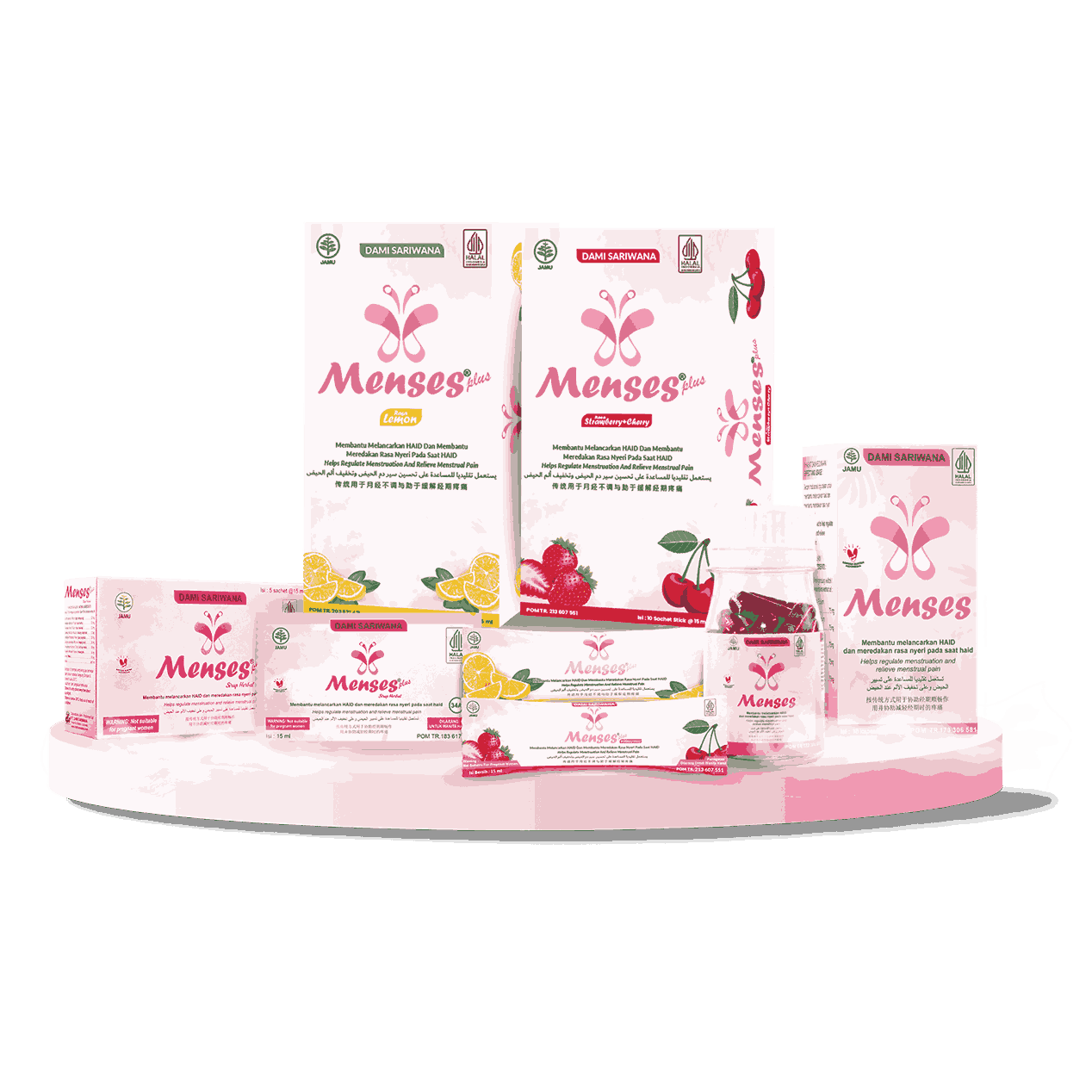
Looking for another way to support your menstrual comfort? Menses Herbal Menstrual Relief & Period Regulator is a herbal product designed to support menstrual health and help you feel more comfortable during your period.
It can be a convenient option to consider as part of your menstrual self-care routine. However, always follow the product instructions and choose products that are suitable for your personal health needs.
🌷 Buy it here now, girl: https://store.menses.id/
Simple Habits That May Help Reduce Menses Pain
The five methods above can be useful during painful periods.
But your habits between periods may also matter.
A healthy daily routine can support your general well-being.
Try to stay physically active throughout the month.
Eat balanced meals.
Drink enough water.
Get regular sleep.
Find healthy ways to manage stress.
These habits cannot guarantee that you will have pain-free periods. However, they can help support your body and overall health.
The most important thing is consistency.
You do not need to change everything at once.
Start with one small habit.
For example, take a short walk each day. Then work on your sleep routine. Later, you can add gentle stretching or other healthy habits.
Small steps can be easier to maintain.
Can Stress Make Period Pain Feel Worse?
Stress does not necessarily cause Menses Pain, but it can affect how you experience pain.
When you are stressed, your muscles may become tense. You may also sleep poorly or feel more tired.
These factors can make period discomfort feel harder to handle.
Stress management may therefore be useful.
You can try simple activities such as:
You do not need a complicated routine.
Even a few quiet minutes may help you relax.
Learning how your body responds to stress can also help you prepare for your next period.
What Is Normal Period Pain?
Mild to moderate cramps are common during menstruation.
The pain may begin shortly before the period or at the start of bleeding. It may become stronger during the first day or two and then improve.
For many people, the pain does not stop them from doing normal activities.
This type of period discomfort can often be managed with simple home care.
But "common" does not mean that you must ignore pain that feels severe.
Your usual period pattern is also important.
If your pain suddenly becomes much stronger than before, it is worth paying attention.
A change in your menstrual cycle can sometimes be a sign that something else needs to be checked.
When Is Menses Pain Too Severe?
Menses Pain may need medical attention when it is severe or affects your everyday life.
Consider speaking with a healthcare professional if:
-
Your period pain stops you from working or studying.
-
You regularly miss school or work because of cramps.
-
Pain medicine does not provide enough relief.
-
Your pain becomes worse over time.
-
You have very heavy menstrual bleeding.
-
You have pain between periods.
-
You have pain during sex.
-
You have unusual vaginal discharge.
-
You have a fever with pelvic pain.
-
You feel faint or extremely weak.
-
Your periods suddenly become much more painful.
These symptoms do not automatically mean that you have a serious condition.
However, they are reasons to get professional advice.
A doctor can ask about your symptoms and menstrual history. They may also perform tests if needed.
Getting checked can help find the cause and identify suitable treatment.
Conditions That Can Cause Severe Period Pain
Most period cramps are not caused by a serious problem.
However, some medical conditions can cause significant menstrual pain.
Endometriosis
Endometriosis happens when tissue similar to the lining of the uterus grows outside the uterus.
It can cause strong menstrual pain.
Some people may also have pelvic pain, pain during sex, pain with bowel movements, or difficulty becoming pregnant.
Symptoms can vary from person to person.
If your period pain is severe and keeps affecting your life, talk to a healthcare professional.
Adenomyosis
Adenomyosis happens when tissue similar to the uterine lining grows into the muscle wall of the uterus.
It may cause painful periods and heavy bleeding.
Some people also feel pressure or tenderness in the lower abdomen.
A healthcare professional can help determine whether further evaluation is needed.
Uterine Fibroids
Fibroids are growths that can develop in or around the uterus.
Many fibroids do not cause symptoms.
However, some can cause heavy bleeding, pelvic pressure, or painful periods.
If you notice a major change in your menstrual bleeding or pain, discuss it with a healthcare professional.
Pelvic Inflammatory Disease
Pelvic inflammatory disease is an infection of the female reproductive organs.
It may cause pelvic pain and other symptoms.
Treatment is important because untreated infection can lead to complications.
If you have pelvic pain together with fever, unusual discharge, or feeling very unwell, seek medical care.
How to Track Menses Pain
Tracking your period can help you understand your symptoms.
You can use a calendar, notebook, or period tracking app.
Record information such as:
You can rate your pain from 0 to 10.
A score of 0 means no pain.
A score of 10 means the worst pain you can imagine.
You do not need to track every detail.
Simple notes are enough.
For example:
"Day 1: strong lower belly cramps. Used heat. Pain improved after 30 minutes."
After several months, you may see a pattern.
This information can also be useful when speaking with a doctor.
Menses Pain and Your Daily Life
Period pain can affect more than your body.
It can also affect your mood, concentration, work, school, and social activities.
You may feel frustrated when you cannot do your usual activities.
You may also feel worried about when the next period will come.
Remember that you do not need to feel guilty for resting.
Your body may need extra care during this time.
If possible, plan lighter activities on days when you usually have stronger cramps.
Keep a heating pad or other comfort items nearby.
Drink water.
Eat regular meals.
Get enough rest.
Small preparations can make your period days easier.
What About Natural Remedies for Menses Pain?
Many people search for natural ways to manage Menses Pain.
Some options include heat, gentle exercise, relaxation, good sleep, and a balanced diet.
These approaches are generally simple and can be part of a healthy routine.
However, "natural" does not always mean "safe for everyone."
Herbal products and supplements can interact with medicines or may not be suitable for certain people.
If you are pregnant, trying to become pregnant, breastfeeding, taking regular medicines, or managing a health condition, talk with a healthcare professional before using herbal products or supplements for period pain.
Do not replace medical treatment with a supplement when you have severe symptoms.
The best approach is one that is safe for your individual situation.
Can You Prevent Menses Pain?
It may not be possible to completely prevent period pain.
Some people naturally have stronger cramps than others.
However, healthy habits may help support better menstrual comfort.
Regular physical activity can be useful.
Good sleep is important.
A balanced diet supports overall health.
Stress management can also help you feel better.
Knowing your cycle can make it easier to prepare for symptoms.
For example, if your cramps usually begin on the first day of your period, you can prepare a comfortable space before that day.
You can have your preferred heat pack ready.
You can plan time for rest.
You can also make sure you have suitable period products available.
Preparation can reduce stress.
Menses Pain: What Should You Do First?
If you have mild period cramps, start with simple care.
Try gentle heat.
Rest when you need it.
Drink enough water.
Try light movement if it feels comfortable.
Eat regular, balanced meals.
If you normally use an over-the-counter pain medicine, make sure it is safe for you and follow the label instructions.
Then pay attention to your symptoms.
If the pain improves, continue with the methods that work for you.
If the pain does not improve or becomes severe, consider talking with a healthcare professional.
You know your usual menstrual pattern better than anyone else.
A major change is worth noticing.
Why You Should Not Ignore Severe Menses Pain
Many people simply accept painful periods as something they have to live with.
But severe pain should not automatically be dismissed.
If pain prevents you from living your normal life, there may be a reason that needs to be checked.
A healthcare professional can help you understand whether your symptoms are typical or whether additional tests may be needed.
You do not have to wait until the pain becomes unbearable.
Early medical advice may help you understand your options.
Your period should not control your entire life.
A Simple Self-Care Routine for Period Days
You can create a simple routine for days when you expect Menses Pain.
Start your morning with enough water.
Eat a light but nutritious breakfast.
If you feel comfortable, do some gentle stretching.
Use a warm compress when cramps begin.
Take short breaks during work or study.
Avoid pushing yourself when you feel exhausted.
At night, try to relax before sleeping.
A warm shower or bath may help you feel more comfortable.
Keep your routine flexible.
Some days you may have more energy than others.
Listen to your body.
Self-care does not mean doing everything perfectly.
It means giving your body the support it needs.
Menses Pain Does Not Look the Same for Everyone
Every menstrual cycle can be different.
One month may be easy.
Another month may be more uncomfortable.
Your symptoms can also change with age and other life changes.
This is why comparing your period with someone else's may not be helpful.
Your normal may be different from another person's normal.
Instead, focus on your own pattern.
Ask yourself:
Is my pain similar to previous periods?
Has it become stronger?
Does it stop me from doing normal activities?
Are there new symptoms?
Is my bleeding different?
These questions can help you decide whether your symptoms need more attention.
When to Seek Urgent Medical Help
Some symptoms should not be ignored.
Seek urgent medical attention if you have severe pelvic or abdominal pain that is sudden or unusual, especially if it comes with fainting, severe weakness, fever, vomiting, or very heavy bleeding.
If you could be pregnant and have significant abdominal or pelvic pain or unusual bleeding, seek medical advice promptly.
Do not try to manage severe or unusual symptoms only at home.
A healthcare professional can assess your symptoms and recommend the right care.
Frequently Asked Questions About Menses Pain
Is Menses Pain normal?
Mild to moderate menstrual cramps are common.
They are often caused by uterine contractions during menstruation.
However, very severe pain, pain that gets worse, or pain that affects daily life should be discussed with a healthcare professional.
How long does Menses Pain usually last?
Period cramps often occur around the beginning of menstruation.
They may last for a few hours or several days.
The exact duration is different for each person.
If pain lasts much longer than usual or occurs outside your period, consider getting medical advice.
What is the fastest way to relieve Menses Pain?
There is no single method that works for everyone.
Gentle heat is a simple option that many people find comfortable.
Some people also benefit from gentle movement, rest, relaxation, or appropriate over-the-counter pain medicine.
The safest choice depends on your individual health.
Does exercise help Menses Pain?
Gentle exercise may help some people feel less discomfort.
Walking, light stretching, and gentle yoga are examples.
You do not need to exercise intensely.
If exercise makes your pain worse, stop and rest.
Can drinking water help with period pain?
Staying hydrated supports overall health and may help you feel better during your period.
Water may also help when you experience bloating or tiredness.
However, drinking water alone is not a guaranteed treatment for Menses Pain.
Should I use a heating pad for cramps?
A heating pad can be a simple way to make period cramps feel more comfortable.
Use a comfortable temperature and avoid excessive heat.
Do not sleep with a heating pad turned on.
Follow the safety instructions provided with the product.
Is severe Menses Pain a sign of a health problem?
Sometimes it can be.
Severe pain may be associated with conditions such as endometriosis, adenomyosis, fibroids, or pelvic inflammatory disease.
Severe pain does not always mean you have one of these conditions.
A healthcare professional can help determine the possible cause.
When should I see a doctor for Menses Pain?
Consider seeing a doctor if your pain is severe, getting worse, does not improve with usual care, or stops you from working, studying, sleeping, or doing normal activities.
You should also seek medical advice if you have unusual bleeding, fever, unusual discharge, pain between periods, or other new symptoms.
Can Menses Pain get worse with age?
Period symptoms can change over time.
Some people experience less pain as they get older, while others may notice new or stronger symptoms.
A significant change in your usual period pattern should be discussed with a healthcare professional.
What can I do before my period starts?
Knowing your cycle can help you prepare.
Keep a heating pad nearby.
Plan enough time for rest.
Keep suitable period products available.
Eat regular meals and stay hydrated.
If you normally use an appropriate pain medicine, make sure you understand how to use it safely.
Conclusion
Menses Pain is common, but you do not have to simply suffer through it.
Simple steps can help you feel more comfortable.
Try gentle heat.
Stay active when you feel able.
Get enough rest.
Eat balanced meals and drink enough water.
Use appropriate pain relief safely when needed.
Most importantly, pay attention to changes in your usual symptoms.
If Menses Pain is severe, getting worse, or affecting your daily life, talk with a healthcare professional.
Your period experience is personal.
Finding what works for your body can take time.
Start with small, safe steps and listen to your body. With the right self-care and medical support when needed, period days can become easier to manage.
References
-
American College of Obstetricians and Gynecologists (ACOG). Dysmenorrhea: Painful Periods. ACOG. Information about menstrual pain, prostaglandins, NSAIDs, exercise, heat therapy, sleep, and medical causes of painful periods.
-
MedlinePlus. Period Pain (Dysmenorrhea, Menstrual Cramps, Menstrual Pain). U.S. National Library of Medicine. Information about the causes, symptoms, home management, and treatment of menstrual cramps.
-
MedlinePlus Medical Encyclopedia. Painful Menstrual Periods. U.S. National Library of Medicine. Information about primary and secondary dysmenorrhea, prostaglandins, heat therapy, symptoms, and when to seek medical care.
-
Mayo Clinic. Menstrual Cramps: Symptoms and Causes. Mayo Foundation for Medical Education and Research. Information about menstrual cramps, prostaglandins, endometriosis, uterine fibroids, adenomyosis, and pelvic inflammatory disease.
-
National Health Service (NHS). Period Pain. NHS. Guidance about period pain symptoms and simple ways to manage discomfort, including warm baths, heating pads, gentle exercise, and pain relief.
-
American College of Obstetricians and Gynecologists (ACOG). Painful Periods. ACOG. Guidance about common period pain symptoms, self-care, exercise, heat therapy, sleep, and when medical evaluation may be needed.
Get Menses from Official Stores
To ensure product authenticity, you can purchase Menses via:
Shopping at official stores ensures security and product authenticity, and makes it easy to access the latest information and promotions.